


.jpg)





.jpg)


.jpg)
.jpg)
.jpg)

.jpg)
.jpg)


.jpg)







Mulberry
Cultivation of mulberry plants is called moriculture. There are over 20 species of mulberry, of which four are common: Morus alba, M. indica, M. serrata and M latifolia. Mulberry is propagated either by seeds, root- grafts or stem cuttings, the last one being most common. Cuttings, 22-23 cm long with 3-4 buds each and pencil thick, are obtained from mature stem. These are planted directly in the field or first in nurseries to be transplanted later.
Many of the farmers under jurisdiction KVK, Kalikiri rely on sericulture for their livelihood.In KVK, Kalikiri mulberry garden is established in an unit area of 0.19 acres. The variety is V1 which was propagated through cuttings and the spacing followed was 2 m between rows and plants. V1 is a high yielding mulberry variety highly suitable for silkworm rearing. It produces nutritive leaf, which is essential for good growth of silkworm larvae. The characteristics of this are described below
V-1
- This variety was released during 1997 and very popular in the field.
- The leaves are oval, broad in shape, thick, succulent and dark green
- About 20,000 to 24,000 Kg of mulberry leaf yield can be obtained in a year.
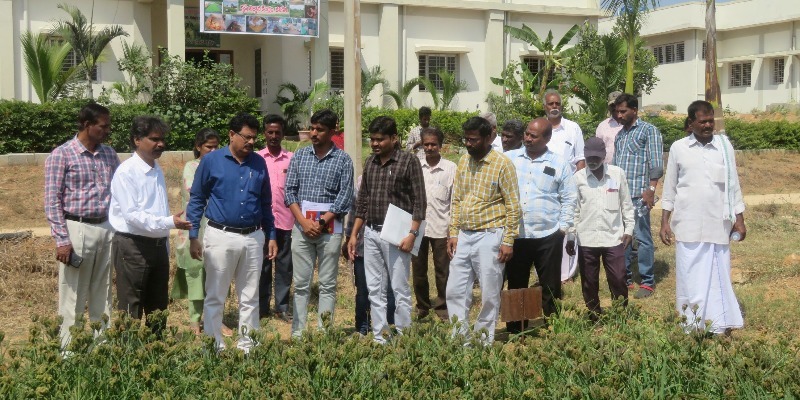
The mulberry crop is shown as demonstration unit to farmers. The production practices like fertilizer application and protection practices for management of insect pests like Bihar hairy caterpillar, mealy bugs and other insect pests and diseases in mulberry will be explained to farmers.
Mulberry Garden

Demo Unit 5 Mulberry Garden
